
A Book Review
Of Thorn & Briar: A Year with the West Country Hedgelayer

This last week I’ve continued to not feel well, and while I haven’t been idle I also don’t have anything particularly fun to share.
I did have an electrician come out and swap an old 240v outlet in the garage to a newer, safer NEMA 6-20R which is exciting. Normally that’s the sort of work I’d do myself, but the existing outlet was a NEMA 10-50R which lacks a dedicated ground wire, and was on a 30a circuit instead of the 50a it should have been. Add in the fact that it’s an older box that’s not made anymore and yeah, I’ll pay $220 and let a professional handle swapping out the breakers.

Since I’ve been dragging ass (is it a cold? is it the flu? is it West Nile monkey SARS?) and trying to avoid doomscrolling I’ve been doing a lot of reading, and I’d like to give a recommendation and a brief overview.
Please note, I am a lot of things, most of them not entirely complimentary, but I am certainly not a professional book reviewer.
Of Thorn & Briar
Maybe nine months ago The Algorithm fed me Paul Lamb’s account, better known as westcountry_hedgelayer on Instagram and I was immediately smitten. Paul is a traditional hedgelayer, or hedger, working primarily out of Dorset in the UK.
For those of us that only speak ‘murican, in the UK fields and pastures were traditionally1 bordered by hedgerows, which are “stock proof fences” made by partially severing the stems of small scrubs and trees, gently bending them over, and then weaving or otherwise securing them together to form a sort of wall.
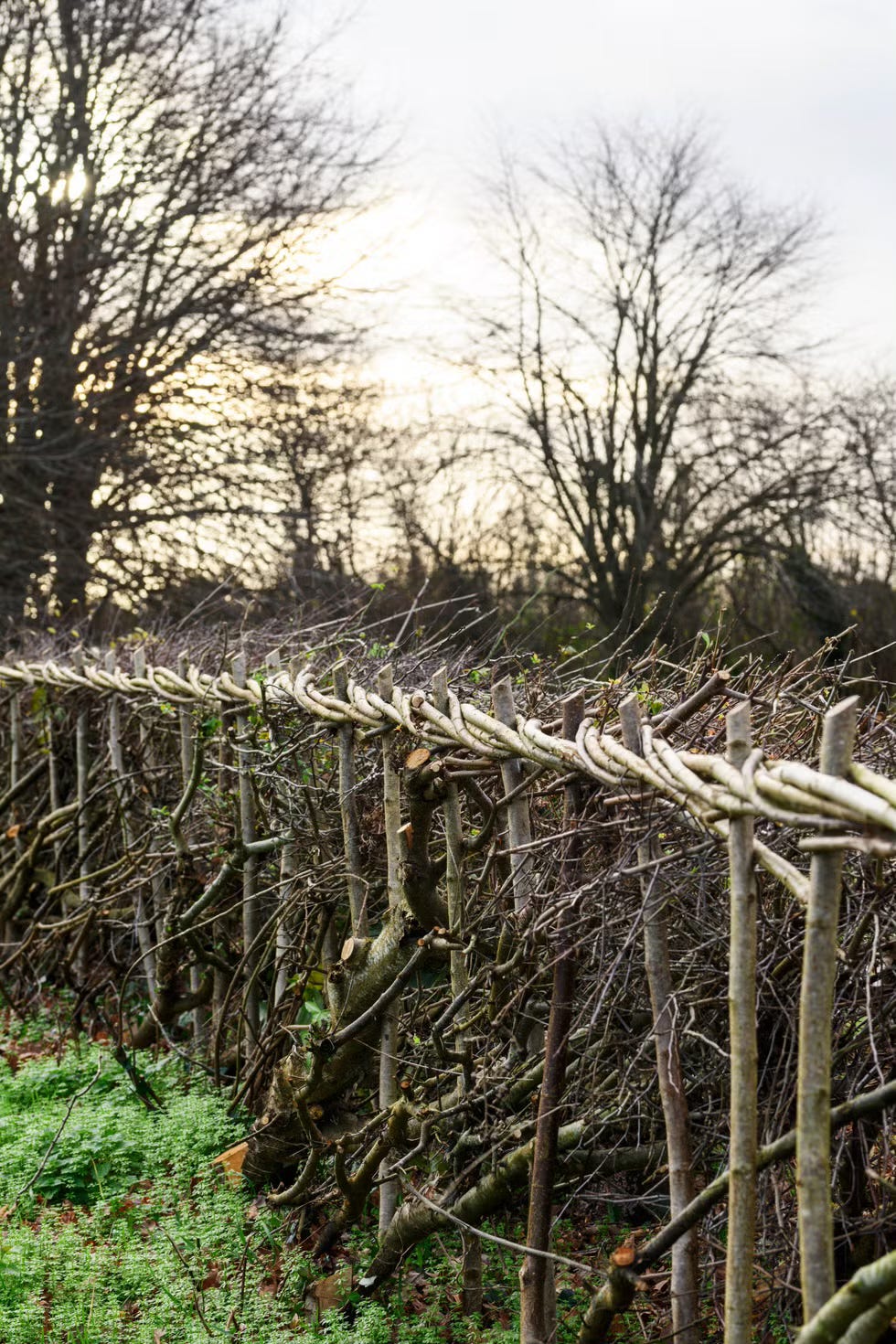
It’s traditional rural craft in the most amazing sense, they’re absolutely beautiful, incredibly advantageous to wildlife, and it’s of course a dying art.
Of Thorn & Briar: A Year with the West Country Hedgelayer is divided by month, and follows Paul through his work, season by season.
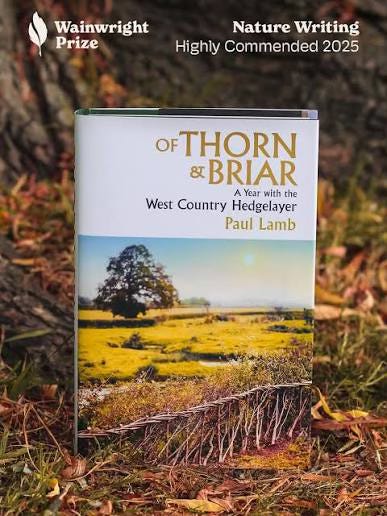
The book is a delight.
It’s an easy read, and I found it beautiful. Paul is the sort of poet that’s born from staring into a campfire after a day of hard work in all manner of weather. He is truly in tune with the land. At the time of his writing the book he lived nomadically out of a caravan, either staying on the property where he was working or with friends and acquaintances he knew in the area.
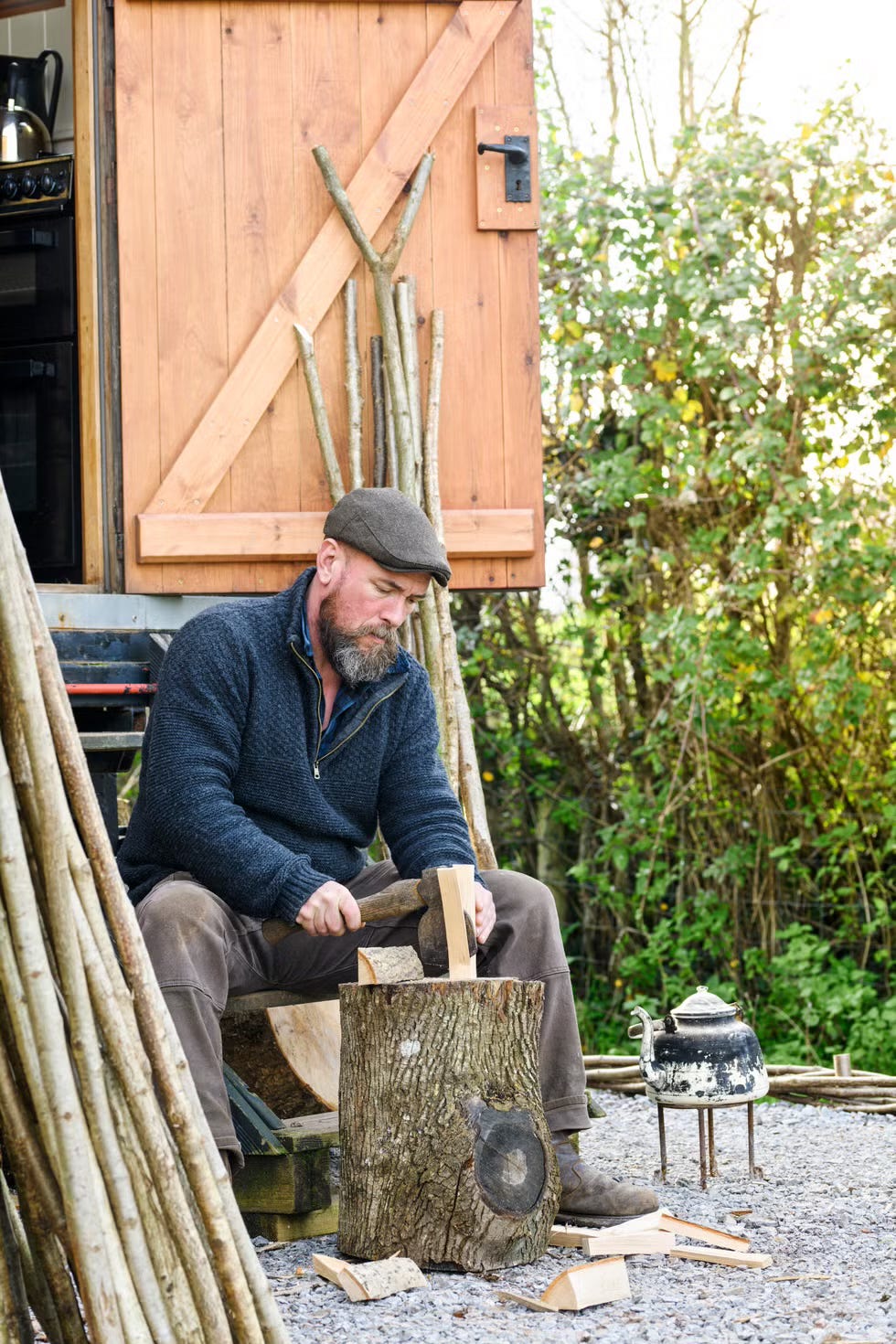
As hedgelaying is an almost forgotten art, before a hedge can be re-laid it often needs to be significantly thinned out and replanted before the artistic work can begin. It’s a long game, looking decades into the future, with hedging occurring every seven years or so.
If you’re reading this, the book will likely resonate with you. There are many, many parallels between Paul’s craft and woodworking, and the story felt familiar, reminding me of Welsh and Windsor chair traditions. It’s incredibly clear that Paul cares deeply about passing the knowledge of his craft on, and that he recognizes that he’s fighting an uphill battle against industrial agriculture. It’s hard work, he doesn’t romanticize it, and he knows it will never make him a wealthy man.
It is, however, vitally important and fulfilling work, and it brings more beauty into the world.
I highly recommend the book.
According to Wikipedia the first written description of hedgelaying was by Julius Caesar. https://en.wikipedia.org/wiki/Hedgelaying
Sounds great. Thanks.
Thanks for the book recommendation! I've always been interested in the work those guys do. Being from west of the pond I didn't know hedges were used for anything but privacy and windbreaks, but they look to have been an essential element in the rural economy for a very long time.